
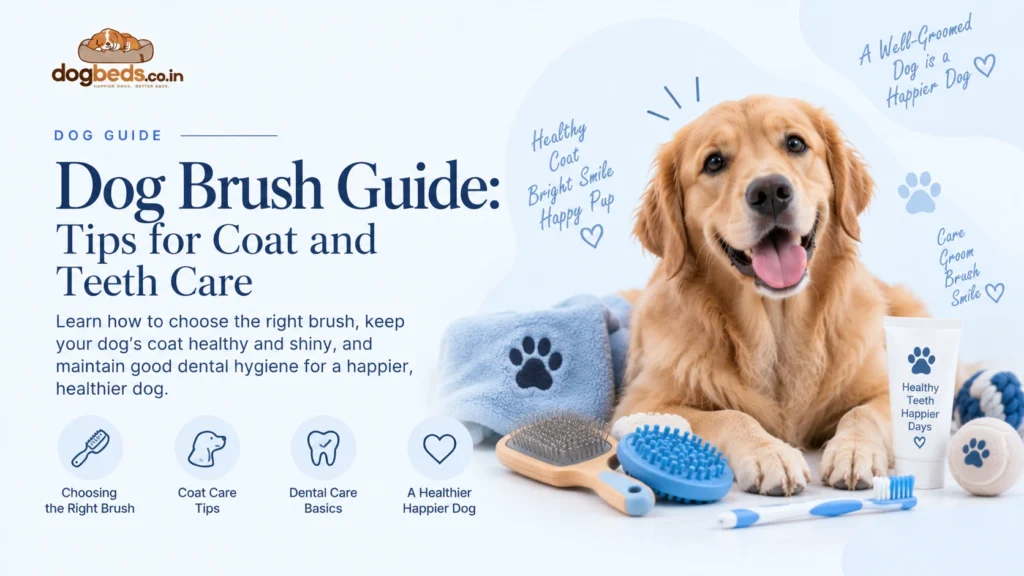
Brushing your pet often can help get rid of shed hair, dust, and little knots in the coat. It also helps move the natural oils through the fur and gives you a chance to notice dry spots, bumps, or other skin changes.
A dog brush should match your dog’s coat and grooming needs. For example, a Labrador with short hair may need a different type of brush than a Poodle or German Shepherd. Keep in mind that brushing the coat and cleaning the teeth are two separate parts of dog care.
This guide from Dog Beds covers coat brushing and dog teeth brushing in separate sections, so you can choose the right tools and use them safely.
Shop the collection

Why Regular Dog Brushing Matters
Brushing does more than remove loose hair. It can help keep the coat clean between baths and reduce the amount of fur left on beds, sofas, and floors. For dogs that shed heavily, regular grooming can make loose hair easier to manage.
Brushing is also a useful time to look for dry skin, redness, lumps, cuts, ticks, or areas that seem painful. If your dog reacts strongly when you touch one area, stop and check with a vet or professional groomer.
How to Choose a Dog Grooming Brush
Different dog brushes are made for different jobs. Before buying a grooming brush for dogs, check the coat type and the result you want.
- Slicker Brush
A dog slicker brush has fine, closely spaced pins. It is useful for removing loose hair and small knots from many medium and long coats. A slicker brush for dogs can also help lift loose undercoat hair, but use gentle pressure.
- Bristle Brush
A bristle brush dog is useful for smoothing the coat and removing light surface dirt. It can work well for dogs with short or smooth coats.
- Rubber Brush
A rubber dog brush has soft flexible tips that can loosen dead hair while giving the coat a gentle massage. It is often useful for short-coated dogs.
Undercoat Brush and Rake
A dog undercoat brush helps remove loose hair from the top coat. A dog rake brush can also work well for dogs that have thick, double-layered fur. Brush gently and avoid pushing the tool hard against the skin.
Comb and Detangler
A dog detangler brush or dog comb brush can help work through knots. For a serious mat, do not pull hard. A groomer may be safer than trying to cut or force the knot out yourself.
Dog Brush for Shedding and Moulting
Shedding is normal, but some dogs lose large amounts of hair during seasonal moulting. A dog brush for shedding can help collect loose fur before it falls around the home.
A dog shedding brush, dog deshedding brush, or moulting brush for dogs may be useful for dogs with dense coats. However, more brushing is not always better. Follow the tool instructions and stop if the skin becomes red or irritated.
For heavy shedders, brushing dog’s undercoat can be useful when the tool is designed for that coat. Dogs like German Shepherds have two layers of fur, so they may need a double coat dog brush or an undercoat brush to remove loose hair.
Choosing a Brush for Different Coat Types
- Short-Haired Dogs
For dogs with short coats, a short hair dog brush is needed to make the grooming easy. A soft bristle brush or rubber grooming brush helps pick up loose hair and dirt without being too harsh on the skin.
If you are looking for the best dog brush for short hair, choose one that does not scratch the skin. Short hair dog shedding brush options should feel gentle rather than harsh.
- Golden Retrievers
Golden Retrievers have a dense coat with feathering and an undercoat. A slicker brush and suitable undercoat tool can help remove loose hair. A good brush routine should cover the body, legs, tail, and feathered areas without pulling.
- Labradors
Labradors have short, thick coats with two layers, so they can shed quite a bit. A rubber brush, bristle brush, or shedding tool can help get rid of the loose fur. If you’re looking for the best dog brush for Labradors, pick one that removes hair gently and feels comfortable on the skin.
- German Shepherds
German Shepherds have a thick two-layer coat and shed a lot of fur. A dog brush for German Shepherd coats should be able to handle the undercoat. A slicker brush, undercoat brush, or rake may be useful depending on the coat.
- Poodles
Poodles have curly coats, so knots and mats can build up if the hair is not brushed often. A slicker brush can help loosen the knots, and a comb can be used after brushing to catch any missed tangles. When picking a dog brush for Poodles, go for one that works well with curly hair and brush gently.
How to Brush a Dog’s Coat
Start when your dog is calm. Let your dog sniff the brush before you begin. Use short, gentle strokes and work through one small section at a time.
Brush in the direction of hair growth where practical. On thicker coats, separate the hair into sections so you can reach the layers underneath. Be extra careful around the face, ears, armpits, belly, and legs.
If you find a tight mat, do not yank the brush through it. A professional groomer can remove difficult mats with less risk of hurting your dog.
The right schedule depends on the coat. Some short-haired dogs may need brushing once or twice a week, while long, curly, or heavy-shedding dogs may need brushing much more often.
Dog Bath Brush and Cleaning Tools
A dog bath brush can be used during washing to help spread shampoo through the coat, but it should be gentle and suited to your dog’s skin.
A dog washing brush with soft rubber tips may be useful for some dogs.
A dog hair remover brush can help pick up loose fur from furniture and fabric. Some owners also look for a dog vacuum brush or dog brush vacuum attachment for removing hair from surfaces. These tools are for cleaning the home, not for running a vacuum directly over your dog’s body unless the product is specifically designed and approved for that use.
Brushing a Dog’s Teeth
Coat brushing and dental care are different jobs. Never use a regular dog brush, slicker brush, or grooming tool on your dog’s teeth.
A dog tooth brush is made for the mouth and usually has a small head that can reach the teeth more easily. Dog toothpaste and brush products are made for canine use and should be chosen instead of ordinary human toothpaste.
How to Brush Dog Teeth
Go slowly at first. Let your dog taste a little dog toothpaste so they can get used to it. When your dog is relaxed, gently lift the lip and brush a few teeth at a time.
Use small, gentle movements along the outside surfaces of the teeth. You do not need to force the mouth open. Keep sessions short at first and reward calm behaviour.
If your dog shows pain, bleeding, strong resistance, or signs of a dental problem, stop and speak with a vet.
How Often Should You Brush Your Dog’s Teeth?
Daily brushing is a useful goal for many dogs. If daily brushing is not possible, create a regular routine and ask your vet what schedule suits your dog’s dental needs.
If you are asking how often to brush dog teeth, consistency matters. Regular home care can help reduce plaque, but it does not replace professional dental checks when they are needed.
Can You Brush a Dog’s Teeth With Human Toothpaste?
No. Human toothpaste is not made for dogs and some formulas contain ingredients that can be unsafe if swallowed. Use toothpaste made for dogs instead.
If you are wondering what can I use to brush my dog’s teeth, a dog toothbrush and dog-safe toothpaste are the basic tools.
Keeping Your Dog Comfortable During Grooming
Keep brushing easy and simple for your pet. Pick a quiet spot and begin with short grooming sessions. If your dog tries to move away, don’t chase them, give them a break instead.
Dog Beds may also feature useful pet-care products from Tail Squad when they fit the needs of dog owners. Choose grooming products based on your dog’s coat, comfort, and daily routine rather than appearance alone.
FAQs
1. What is the best dog brush for shedding?
When your dog sheds a lot, the best dog brush for shedding can help make grooming easier. A rubber brush or slicker brush can pick up loose hair. For dogs with two layers of fur, choose one that can reach the hair under the top layer.
2. What is the best dog brush for short hair dogs?
For short-haired dogs, a soft bristle or rubber brush can make grooming easier. The best dog brush for short hair should pick up loose fur and feel gentle against your dog’s skin.
3. What is the best dog brush for Golden Retrievers?
A slicker brush combined with a suitable undercoat tool can work well for Golden Retrievers. Brush gently through the dense coat and feathered areas, paying attention to places where tangles can form.
4. How do you brush a dog’s teeth?
Use a dog toothbrush with pet-safe toothpaste. Raise your dog’s lip very softly and brush the outside of a few teeth using short, gentle strokes. Keep the first few sessions short and let your pet get used to this.
5. How often should you brush your dog’s teeth?
Brushing your dog’s teeth every day is a good goal, but some dogs may need a different routine. If your dog has dental issues or does not like tooth brushing, talk to your vet about what may work best.
6. Can you brush a dog’s teeth with human toothpaste?
No. Human toothpaste is not suitable for dogs. Use a dog-safe toothpaste with a toothbrush designed for pets, and speak with your vet if you need other options for cleaning dog teeth without brushing.
Final Thoughts
A dog brush can make it easier to remove shed hair and keep the coat clean. While brushing, you can also look over the skin for dry patches, small lumps, or anything that looks unusual. The brush you need will depend on the type of coat your pet has, as it is different for all the dogs. Keep coat brushing and teeth cleaning as two separate tasks, and use toothpaste and other dental items made for pets. Begin with a few minutes at a time and let your pet settle into the routine. With regular practice, grooming can become a normal part of everyday care.