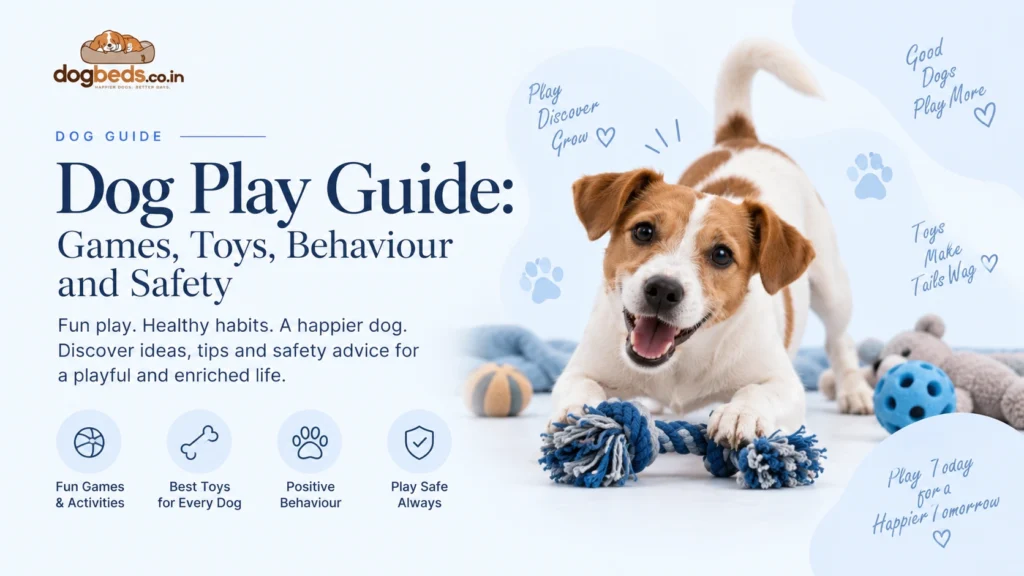
Play is a normal part of a dog’s day. It keeps them active, lets them explore, gives their minds something to do, helps with social skills, and gives them time to bond with their family. Watching dogs playing can also give you a better idea of your pet’s behaviour and personality.
From fetch to tug games, play looks different from one dog to another. Some dogs love chasing toys, while others prefer wrestling, scent games, or quiet activities.
For Dog Beds readers, this guide covers dog play behaviour, play signals, safe games, toys, play biting, and how to tell if dogs are playing or fighting.
Shop the collection

Why Do Dogs Play?
Dogs play for different reasons at different stages of life. Puppies often play to develop coordination, learn how to interact, and practise controlling their behaviour. Adult dogs may play for exercise, entertainment, or to spend time with other dogs and their families.
Play helps dogs stay busy, burn off extra energy, and enjoy themselves. It should feel natural and easy for your dog. Let them stop when they need a break, walk away for a while, and come back to play when they are ready.
Understanding Dog Play Behaviour
Learning dog play behaviour makes it easier to know when your pet is having fun and when it needs a break. A playful dog often has a loose body, relaxed movements, and bouncy actions.
One of the clearest signs is the dog play bow. The front legs and chest move down while the rear stays raised. This dog play stance is often an invitation to interact.
You may also notice:
- Quick turns and playful running
- Taking turns during a game
- Relaxed facial expressions
- Brief pauses before starting again
- Bringing a toy to another dog or person
- Dog play bowing followed by a dash away
These dog play signals are useful, but look at the whole body. Every dog has its own style of play.
Dog Play Fighting: Normal or a Problem?
Dogs play fighting can look dramatic. They may chase, wrestle, mouth each other, or make noisy sounds. This does not always mean they are angry.
So, why do dogs play fight? Play fighting gives dogs a way to practise movement, communication, and self-control. During healthy play, both dogs usually take turns. One may chase first, then become the one being chased. They may also pause and restart on their own.
To tell if dogs are playing or fighting, look for loose bodies and balanced interaction. Dogs that are playing often switch roles and return willingly.
Play may be turning into conflict when you see:
- Stiff or tense body language
- Hard staring
- Repeated attempts to escape
- One dog constantly trying to stop
- A tucked tail or clear fear
- Serious snapping or tension
If unsure how do you know if dogs are playing or fighting, calmly separate them and give both dogs space. Never put your hands between fighting dogs.
Dog Play Biting and Mouthing
Puppies and adult dogs often use their mouths when they are having fun. Dog play biting is common during games such as chasing, tugging, or wrestling. Soft mouthing is usually a normal part of play and is different from a bite that is meant to hurt. It is common for owners to wonder, why does my dog bite me playfully? In many cases, dogs use their mouths as a way to interact during play. Puppies may also mouth things because they are still learning about the world around them.
If your dog starts biting too hard, stop the game for a short time. Avoid using your hands for rough play and give your dog a toy to chew, fetch, or tug instead.
When learning how to stop a dog from play biting, stop playing when your dog’s teeth touch your skin, redirect them to a toy, and reward gentle behaviour. If the biting causes pain, happens often, or seems connected to fear or aggression, it is best to get help from a qualified dog trainer or behaviour specialist.
Games to Play With Dogs
There are plenty of easy games to play with dogs at home or outside. Choose activities based on your dog’s age, health, energy, and what they enjoy most.
- Fetch
Dog playing fetch is a classic activity. Begin with your dog’s favourite toy and gently throw it a short way. Praise your dog for moving toward it, then encourage a return.
If you are learning how to teach a dog to play fetch, keep sessions short. Use praise or treats to encourage a return. Gradually increase the distance.
Why do dogs like to play fetch? Chasing a moving object is exciting for many dogs, and returning it creates a fun pattern between dog and owner.
- Tug of War
Dogs playing tug of war can have fun with this simple game when it is played safely. Choose a strong tug toy and keep the game steady and controlled. Do not yank the toy suddenly, as this may put stress on your dog’s neck or joints.
So, why do dogs like to play tug of war? The pulling action can be exciting and rewarding, while the game also gives dogs a chance to interact with their owners. Tug can also be a good time to practise simple cues such as “drop it.”
- Chase and Find Games
Chasing a toy or finding a hidden treat can make good mental games for dogs. Hide a toy behind a chair or place treats around a safe room and let your dog search.
These indoor games for dogs are useful when outdoor time is limited.
How to Play With a Dog Safely
Knowing how to play with a dog is mostly about finding games that suit your pet. A lively young dog may want to run and play for longer, while an older dog may be happier with slow, easy games.
When playing with dogs, these are the things you should keep in mind:
- Pick toys that are right for your dog’s size and chewing habits.
- Let your dog have a break between games.
- Do not encourage rough play or biting.
- Look over toys and remove any that are broken.
- Keep watch when your dog plays with a dog they do not know.
- Stop the game if you see your dog is tired, scared, or uncomfortable.
Dog Playing With Toys
Dog playing with toy activities can provide physical and mental stimulation. Balls, tug toys, soft toys, treat-dispensing toys, and puzzle toys can all have a place in a dog’s routine.
Choose dog play toys with safety in mind. Avoid toys that are small enough to swallow or that break into sharp pieces.
Toys for dogs to play alone can help when your pet needs something to do while you are nearby. Self play dog toys still need careful selection, and some dogs need supervision even with toys designed for independent use.
Dog Playing With Ball
A dog playing with ball can get a good burst of exercise. Choose a ball that is large enough not to be swallowed but easy for your dog to carry.
For dogs that chase hard, avoid throwing the ball near roads, stairs, or other hazards. A secure dog play area is a better choice for active games.
Dog Play Dates and Groups
A dog play date is a great way for friendly dogs to enjoy some time together. Pick dogs that have similar energy and play habits, and let them meet in a quiet, spacious place.
Dog play groups can also be a good option when the dogs are comfortable around others. Keep an eye on their behaviour and give them breaks when needed. Not every dog enjoys group play, so a shy or nervous dog should never be pushed into interacting.
A good dog play area should have secure boundaries, water, shade, and enough room for dogs to move apart.
Dog Play Equipment and Play Pens
Dog play equipment can add variety to exercise. Low platforms, tunnels, ramps, and simple obstacles can encourage movement and problem-solving. Equipment should be stable, suitable for your dog’s size, and used on a safe surface.
Dog play pens can be helpful for puppies, supervised play, or giving your dog a safe space to settle for a while. They should not be used as a substitute for regular exercise, interaction, or toilet breaks.
Choosing Dog Toys for Play
When picking dog toys for play, keep your dog’s size, age, chewing habits, and interests in mind. Some dogs love playing with a ball, while others have more fun with toys that make them think.
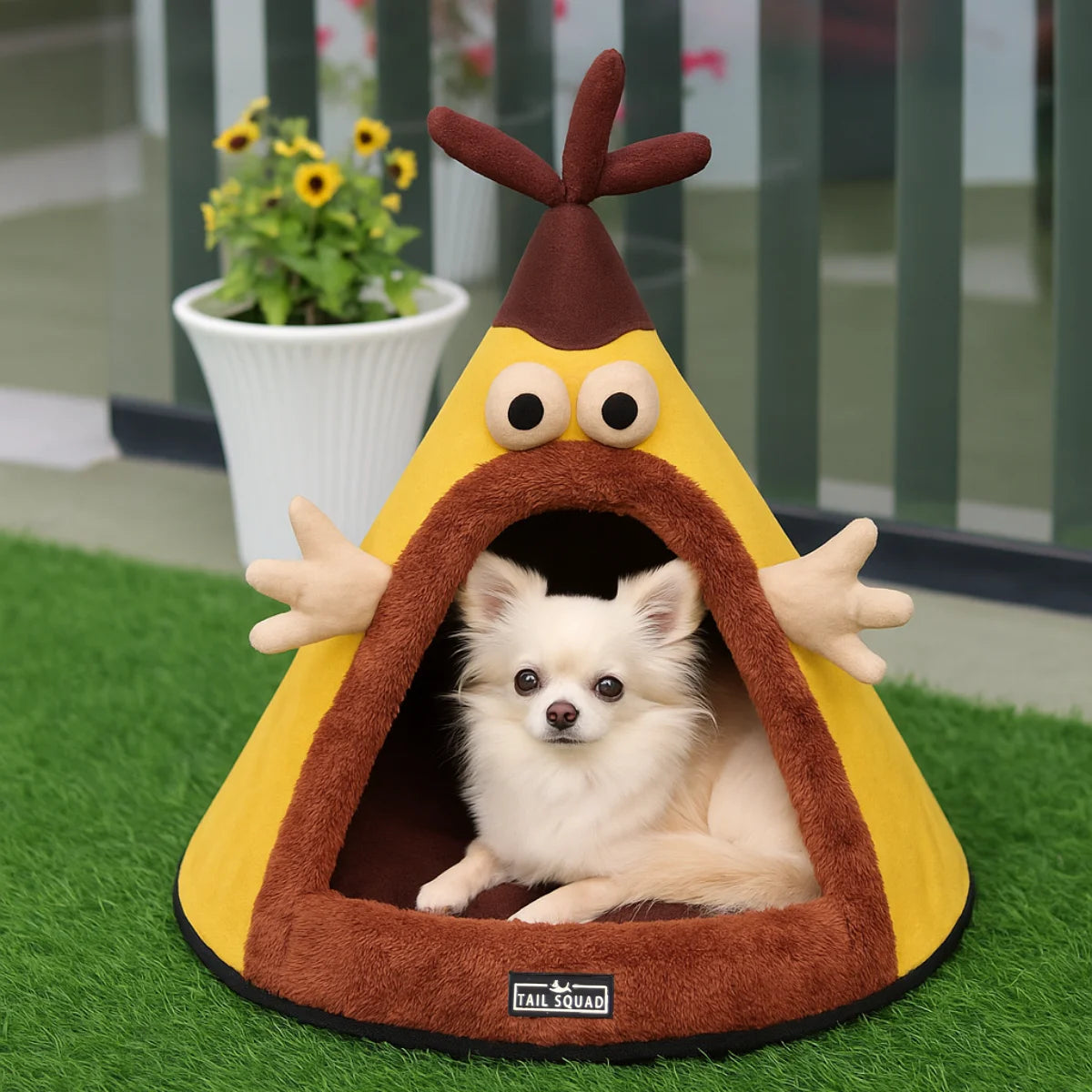
Tail Squad also offers dog products that can fit into a pet’s daily routine. On Dog Beds, you may find Tail Squad options worth considering when shopping for your dog. Check product details, size, materials, and care instructions before buying.
Playful Dog Breeds
Some dogs are naturally more playful than others, and certain breeds tend to enjoy active games. Playful dog breeds such as Labrador Retrievers, Golden Retrievers, Border Collies, Australian Shepherds, and many terriers often like running, chasing, and interactive play. Still, every dog has its own personality and favourite way to play.
Even within one breed, dogs can have very different play preferences. Age, training, health, and past experiences also affect play.
Signs of Healthy Play
Healthy play between dogs usually has a back-and-forth rhythm. Both dogs appear willing to join, pause, and continue. A dog may briefly walk away and then return.
Play should be a positive experience for both dogs. If one dog keeps moving away, tries to hide, stays unusually still, or avoids the other dog, it may not be comfortable. Give them some space and stop the session if they continue to show signs of stress.
Understanding dog play body language can help you know how your pet feels. A dog that is relaxed, moves freely, has a loose face, and willingly returns to play is usually comfortable with the interaction.
Building a Good Play Routine
A good dog play routine can include active games, quiet time, and activities that keep the mind busy. For some dogs, short play sessions are more enjoyable than long play sessions.
Rotate activities so your dog does not depend on one game. For example, try fetch one day, scent games the next, and a puzzle toy another day.
After active play, give your dog time to settle and rest. Dog beds provide a place to relax.
FAQs
1. Why does my dog bite me playfully?
Dogs may mouth when they get excited during play. If you’re wondering why does my dog bite me playfully, stop hand games and offer a toy instead.
2. How do I stop a dog from play biting?
To learn how to stop a dog from play biting, stop the game when teeth touch skin, wait for calm behaviour, and offer a toy. Be consistent and avoid encouraging hand biting.
3. How do you know if dogs are playing or fighting?
To tell how do you know if dogs are playing or fighting, look at their overall behaviour. Dogs at play usually stay relaxed, move freely, and choose to keep interacting. If you notice stiff bodies, fear, constant attempts to get away, or rising tension, separate the dogs and end the play.
4. How do you teach your dog to play fetch?
To learn how do you teach your dog to play fetch, start with a favourite toy, encourage your dog to chase it, and reward any return toward you. Keep sessions short and fun.
5. What are good games to play with dogs indoors?
Indoor games to play with dogs can include hide-and-seek, toy hunts, gentle tug, scent activities, and easy puzzles. Choose games based on your dog’s age, size, and energy level.
6. What are good toys for dogs to play alone?
Toys for dogs to play alone can include puzzle toys, treat-dispensing toys, and durable toys made for independent use. Pick a toy that suits your dog’s size and keep an eye on them during play when necessary.
Understanding Dog Play
Playing with your dog can help keep them active and content. Simple games such as fetch, tug of war, toy games, and play dates give dogs a chance to move, think, and spend time with you. Knowing dog play behaviour can also help you tell when your dog is having fun and when it is time for a break.