
The Siberian Husky is one of the world’s most beautiful and energetic dog breeds. Famous for its wolf-like appearance, thick double coat, and striking blue eyes, the Siberian Husky dog is intelligent, friendly, and always ready for adventure. Originally developed to pull sleds across snowy landscapes, this husky dog breed is now loved by families across the world.
If you’re planning to welcome a Siberian Husky puppy into your home or simply want to learn more about this amazing husky breed, this guide covers everything you need to know—from history and appearance to grooming, feeding, health, growth, and Siberian Husky training.
History of the Siberian Husky
The Siberian Husky comes from the cold regions of northeastern Siberia, where the Chukchi people bred these dogs thousands of years ago. They needed a hardworking husky canine that could pull sleds over long distances while surviving freezing temperatures.
Shop the collection

Over time, the Siberian Husky became known as a strong, friendly, and hard-working dog. In the early 1900s, Huskies were taken to Alaska for sled races. They soon became popular because they were fast and could travel long distances.
Today, the breed of husky dog is no longer used only for sledding. They are wonderful family companions, active outdoor partners, and successful participants in dog sports.
Siberian Husky Appearance
The Siberian Husky has a strong body, a thick double coat, upright ears, and a bushy tail.
One of the most famous features of this husky type of dog is its beautiful eyes. Many owners love the blue eyed Huskies, but Huskies can also have brown eyes or even one blue and one brown eye. The unique eyes of Husky are one of the reasons the breed attracts so much attention.
Adult males are usually larger than females. A husky dog male often has a stronger build, while a female Husky dog is slightly lighter and more compact.
Although many people think the Siberian Husky and wolf are closely related because they look alike, Huskies are fully domesticated dogs with friendly personalities. Their wolf-like appearance does not mean they behave like wolves.
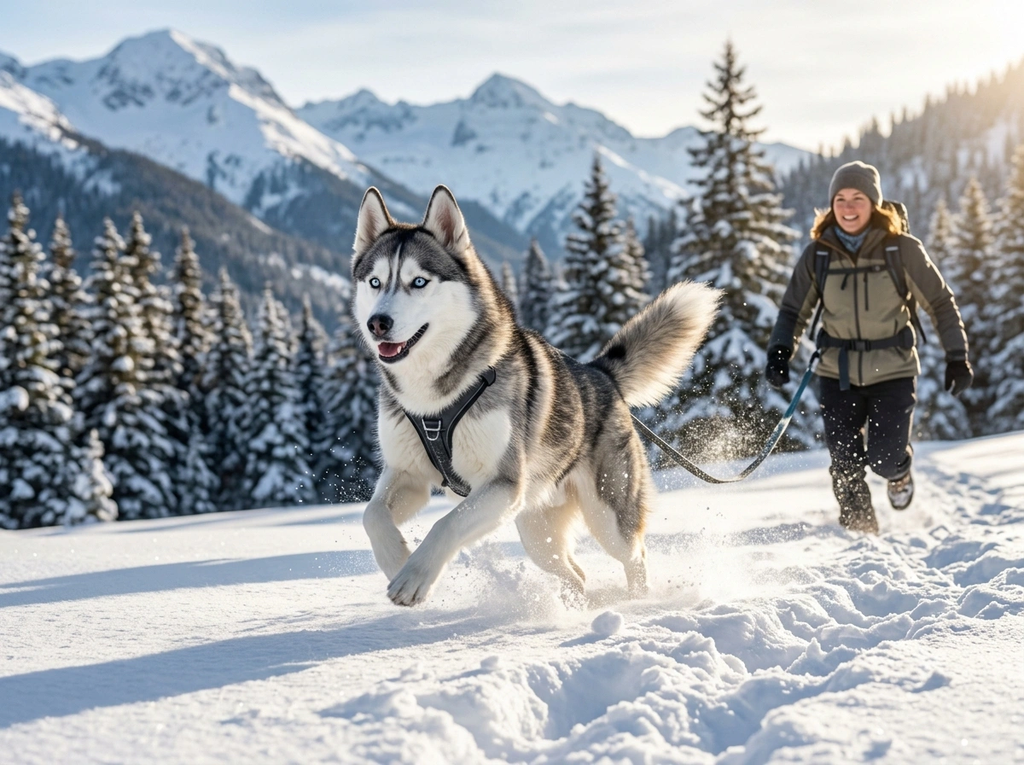
Different Colours and Types of Siberian Huskies
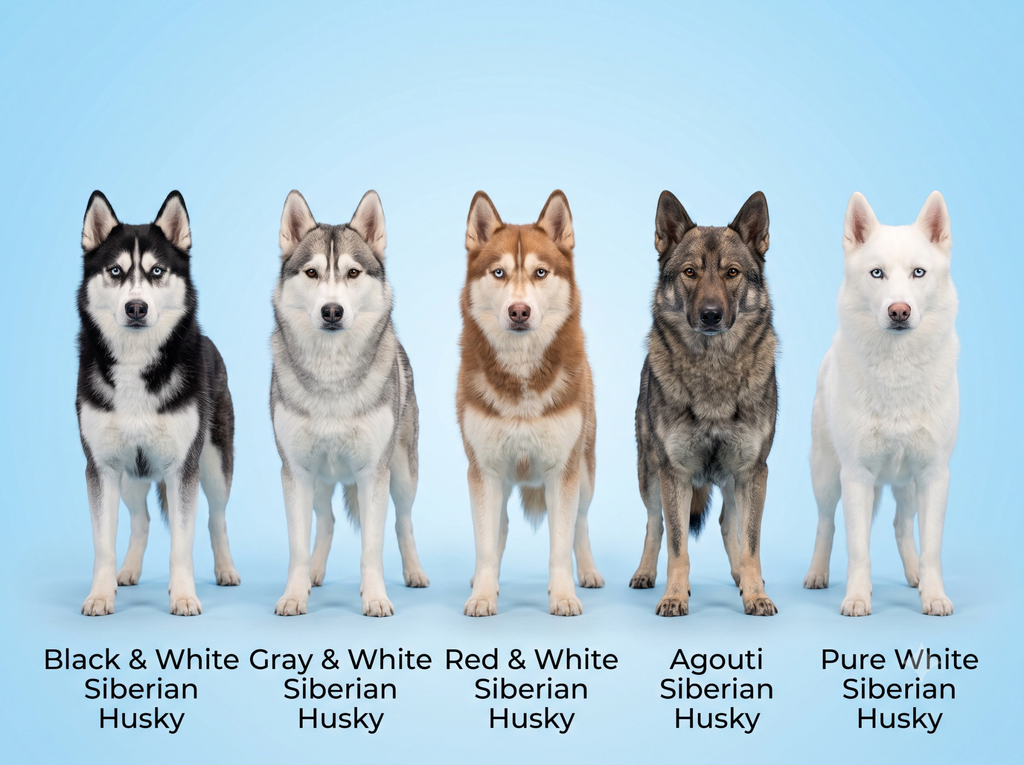
One of the most attractive features of the husky breed is its wide variety of coat colours and markings. Every Siberian Husky dog has its own unique appearance, making each one special. While their personality and energy levels are similar, their coat colours can vary from light white to deep black and everything in between.
Some of the most popular husky dog varieties include:
Black and White Siberian Husky
The black and white coat is the most common colour pattern seen in the Siberian Husky dog breed. It usually features a black back, white chest and legs, and a distinctive facial mask. Many of these Huskies also have striking blue or brown eyes.
Siberian Husky Gray and White
A Siberian Husky grey and white has a soft grey coat with bright white markings on the face, chest, and legs. This elegant colour combination is one of the most popular choices among Husky lovers.
Grey Siberian Husky
The grey Siberian Husky has a coat that ranges from light grey to dark charcoal. This colour makes it look elegant and well suited for snowy surroundings.
Brown Siberian Husky
A brown Siberian Husky, sometimes called a chocolate Husky, has rich brown fur instead of the usual black colouring. This beautiful coat colour is less common and stands out because of its warm appearance
.
Brown Husky Dog
The term brown Husky dog is often used for Huskies with chocolate or copper-coloured coats. These dogs may have amber or blue eyes, making them even more eye-catching.
Red Siberian Husky
The red Siberian Husky has shades of red, copper, or light orange mixed with white markings. Their nose is often liver-coloured instead of black, giving them a unique look.
Husky Dog Red
A husky dog red has the same beautiful reddish coat but may range from light cream-red to deep copper. This colour is becoming increasingly popular among pet owners.
Agouti Siberian Husky
The agouti Siberian Husky has one of the rarest coat patterns in the breed. Each hair has multiple colours, giving the dog a wild, wolf-like appearance. Despite the look, they are just as friendly and playful as other Huskies.
Husky Pure White
The husky pure white has a completely white coat with very few or no darker markings. Many white Huskies have bright blue eyes, although brown eyes are also possible. Their snow-like appearance makes them one of the most admired colour varieties.
Although there are many different types of Huskies based on coat colour and markings, they all belong to the same Siberian Husky dog breed and share the same active, intelligent, and friendly nature.
Some people also use the term American Husky dog, but it is commonly used to describe Siberian Huskies bred in the United States rather than a separate recognised breed. Regardless of where they are bred, Siberian Huskies remain famous for their athletic build, endurance, and love for outdoor adventures.
Siberian Husky Personality
The Siberian Husky is friendly, playful, and full of energy. They get along well with children, other dogs, and even strangers, making them great family pets.
However, they are also independent thinkers. This means they sometimes choose to do things their own way. Patience and consistent husky training help them become well-behaved companions.
If you enjoy hiking, jogging, or outdoor adventures, the Siberian Husky dog can be an excellent partner because of its high energy level.
Siberian Husky Growth Chart
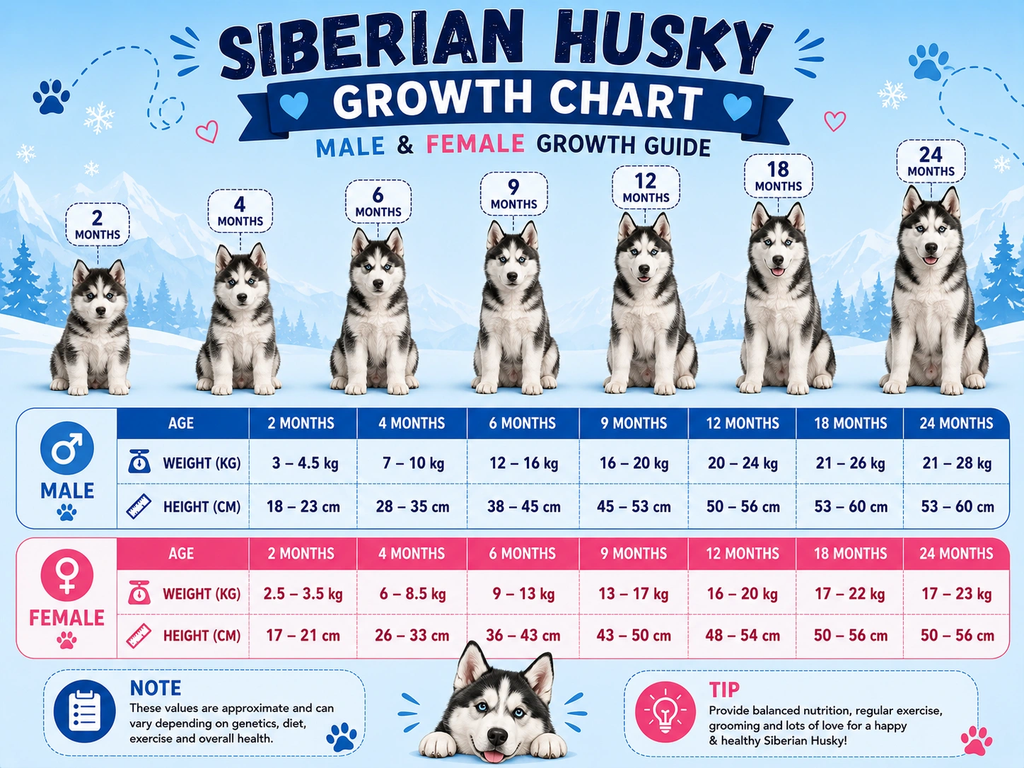
A Siberian Husky puppy grows quickly during the first year of life. Good nutrition, regular exercise, proper sleep, and routine vet visits all play an important role in healthy growth. While every dog grows at its own pace, the growth chart image above gives a general idea of what to expect.
Male Huskies usually grow faster and become slightly larger than females. A husky dog male generally reaches an adult weight of around 21–28 kg and a height of 53–60 cm by 18 to 24 months. A female Husky dog is usually lighter, weighing about 17–23 kg with a height of 50–56 cm when fully grown.
Growth varies from one Siberian Husky puppy to another. Focus on proper care and regular health check-ups.
The first six months are the fastest-growing stage. During this time, your husky as a puppy needs a balanced diet, plenty of rest, and controlled exercise to support healthy bones and muscles.
Caring for a Siberian Husky Puppy
Bringing home a Siberian Husky puppy is exciting. Early care, training, and a daily routine help in your puppy growth. Introduce your puppy to new people, sounds, and safe places from a young age. Many newborn Siberian Husky puppies have blue eyes, but their eye colour may change as they grow.
Exercise Needs of a Siberian Husky
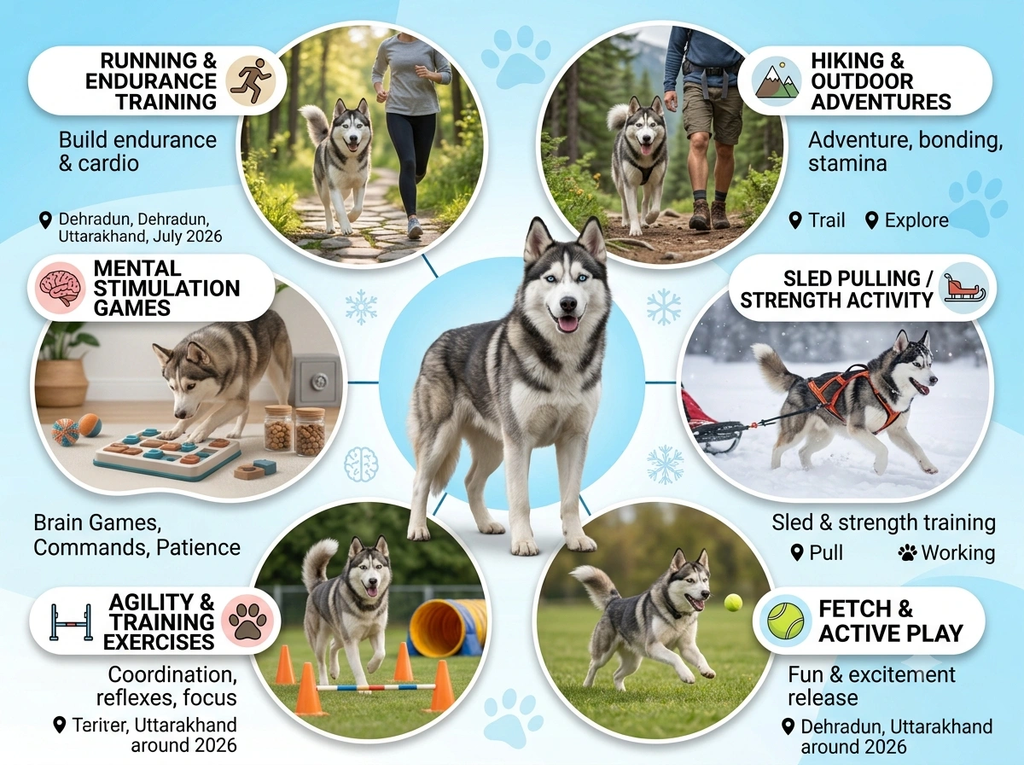
The Siberian Husky dog is very active and needs 1–2 hours of daily exercise. Walks, running, playtime, and training games help keep them healthy and happy. A healthy adult Husky needs at least one to two hours of exercise daily. Long walks, running, hiking, fetch, agility games, and mental puzzles all help keep them happy.
As shown in the image, activities like running, hiking, agility training, strength exercises, fetch games, and puzzle toys are excellent ways to use their energy.
Without enough exercise, the husky breed may become bored and develop unwanted habits like chewing furniture, digging, or excessive barking.
Grooming and Coat Care
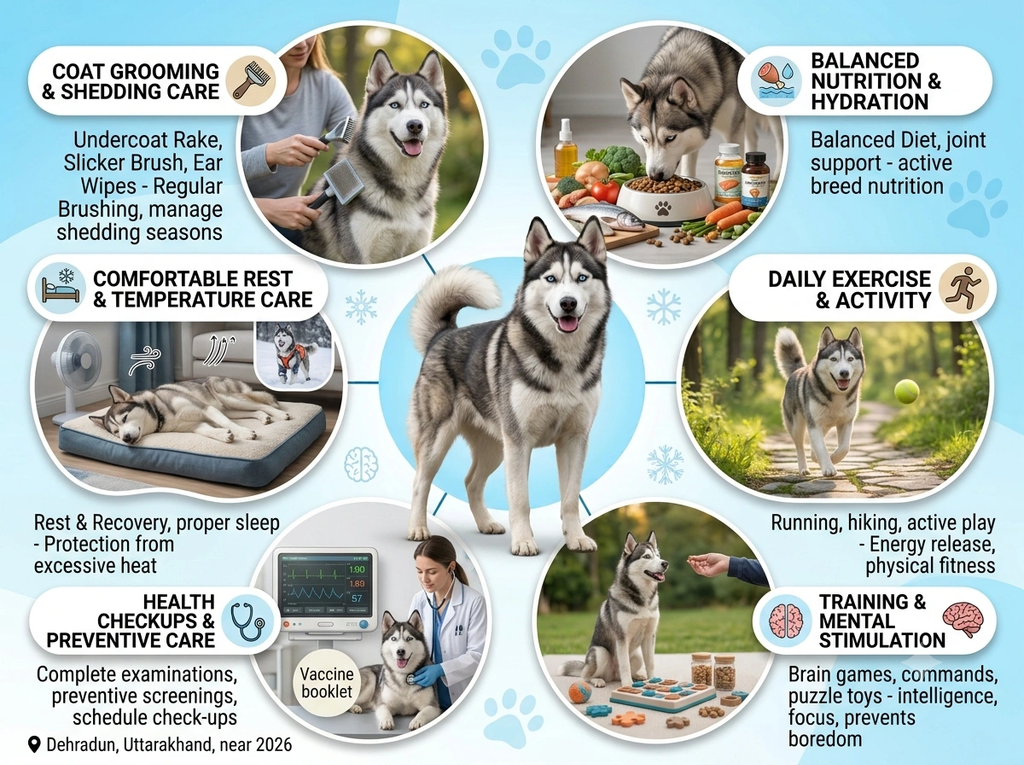
The Siberian Husky dog breed has a thick double coat that protects it from both cold and warm weather. Although Huskies naturally keep themselves clean, regular grooming is still important.
Brush your Husky two or three times each week. During seasonal shedding, daily brushing helps remove loose fur and keeps the coat healthy.
The grooming image above shows useful care practices, including brushing with an undercoat rake or slicker brush, regular ear cleaning, nail trimming, dental care, and routine health check-ups.
Feeding and Health Care
A healthy diet helps the Siberian Husky stay active and strong. Feed high-quality dog food with protein, healthy fats, vitamins, and minerals.
Fresh drinking water should always be available, especially after exercise.
Like many dogs, the Siberian Husky may have some health problems, including:
- Hip dysplasia
- Eye problems
- Cataracts
- Progressive retinal atrophy (PRA)
- Thyroid problems
Regular vet check-ups, vaccinations, parasite control, and a healthy weight help keep your Husky healthy.
Siberian Husky Training
The Siberian Husky is intelligent and independent. This means Siberian Husky training requires patience, consistency, and positive reinforcement.
Start Siberian Husky dog training early by teaching basic commands like sit, stay, and come. Reward good behaviour with treats, toys, or praise. Early socialisation and fun activities like puzzle toys and training games help build confidence and prevent boredom.
Choosing Husky Puppies
If you plan to buy husky puppies, always choose a responsible husky breeder who focuses on the health and temperament of the dogs.
Healthy husky puppies breeds should have bright eyes, clean ears, smooth coats, and playful behaviour. Ask for vaccination records and health certificates before bringing your puppy home.
Many Huskies also find loving homes through adoption. Some families choose a Siberian Husky mixed breed, which can inherit different traits from both parents.
Facts About the Siberian Husky
- Not all Siberian Huskies have blue eyes, and despite their wolf-like appearance, they are friendly family dogs.
- They come in many coat colours, including red, grey, brown, agouti, and pure white.
- Similar breeds include the Alaskan Malamute and Samoyed.
Conclusion
The Siberian Husky is a loyal, active, and intelligent companion that thrives with active families. Known for the striking eyes of Husky and its beautiful appearance, this popular husky dog breed needs regular exercise, proper care, and early husky training to stay healthy and happy. Whether you’re raising a Siberian puppy or an adult Siberian Husky dog, understanding the breed’s needs will help you build a strong, lifelong bond.