

The Saint Bernard dog is one of the largest and most lovable dog breeds in the world. Known for its gentle nature, loyal personality, and impressive size, the Saint Bernard has earned a place in homes across the globe. Although it was originally bred for rescue work in the snowy Alps, today it is best known as a calm and affectionate family companion.
If you are looking for information about St Bernard dog, planning to bring home St Bernard puppies, or simply want to learn more about the Saint Bernard breed, this guide covers everything you need to know, from its history and personality to its appearance and care.
History of Saint Bernard Dog
The history of Saint Bernard dog dates back nearly a thousand years to the Great St. Bernard Hospice in the Swiss Alps. Monks living at the hospice developed these powerful dogs to help travelers cross dangerous mountain passes between Switzerland and Italy.
Shop the collection


The early dog St Bernard worked as a rescue and guard dog in the snowy Alps. These dogs were strong, calm, and could easily move through deep snow to find and rescue stranded travellers.
One of the most well-known Saint Bernards was Barry, a rescue dog that is believed to have saved more than 40 people. His remarkable work made the Saint Bernard dog famous and showed the world how brave and loyal this breed truly is.
Many people know the famous image of a Saint Bernard whiskey barrel hanging around the dog’s neck. However, experts believe these rescue dogs never actually carried small barrels during rescue missions.
Today, the Saint Bernard breed is no longer commonly used for mountain rescues. Instead, it has become a gentle family dog that is loved for its calm nature and kind personality.
Saint Bernard Appearance
Even though Saint Bernards are large dogs, they have kind eyes and a calm, friendly look.
Its thick double coat helps keep it warm in cold weather, and its large paws make it easier to walk on snow and rough ground. Saint Bernards take about 18 to 24 months to reach their full size.
Male Saint Bernard dogs are usually bigger than females. Males weigh around 60–76 kg and females around 50–68 kg. Puppies grow quickly in the first year and continue developing until 18–24 months.
Female Saint Bernards are slightly smaller than males. Adult females usually weigh 50–68 kg and stand 60–66 cm tall. They continue growing until about 18–24 months of age.
Every Saint Bernard puppy grows at its own pace. Good nutrition, regular exercise, and proper care help support healthy growth and strong bones.

Saint Bernard Coat Types and Colours
There are mainly two recognised coat varieties of the Saint Bernard breed. Here are some of the most popular varieties you may come across.
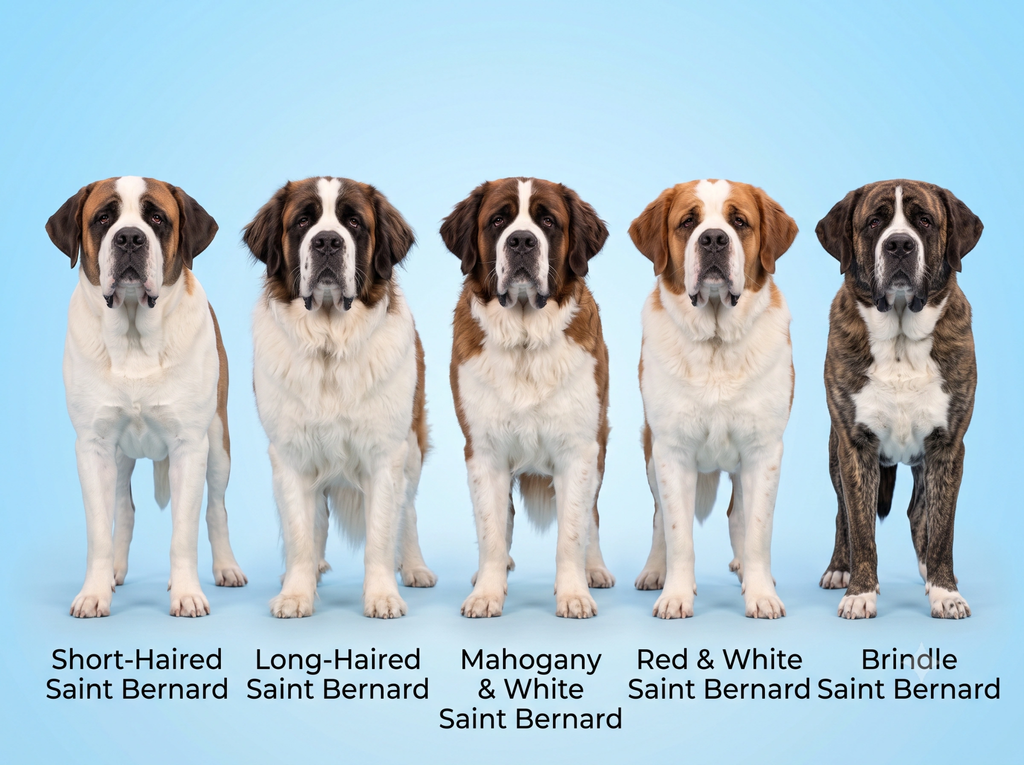
Short-Haired Saint Bernard
The Saint Bernard short hair has a short, smooth coat that is easy to look after. It needs less brushing than the long-haired Saint Bernard.
Long-Haired Saint Bernard
The long-haired Saint Bernard has a longer, thick coat with extra hair on the legs, chest, ears, and tail. Brushing regularly helps to keep the coat tangle free and clean.
Mahogany Saint Bernard
The Mahogany Saint Bernard has dark reddish-brown markings with white patches. This is one of the most common and well-known colour combinations in the Saint Bernard breed.
Brindle Saint Bernard
A Brindle Saint Bernard has dark stripes over a lighter brown or reddish coat. While less common than the classic mahogany pattern, brindle is an accepted coat colour and gives each dog a unique appearance.
Red Saint Bernard
The Red Saint Bernard is a beautiful variety of the Saint Bernard breed with rich red markings mixed with white patches across the body. The shade can range from light red to a deeper reddish-brown. Like other Saint Bernards, they are loved for their gentle, friendly, and caring nature.
Saint Bernard Personality
The Saint Bernard dog is famous for its calm, patient, and affectionate temperament. Even though it is one of the largest dog breeds, it is known as a gentle giant because of its friendly and caring nature.
The Great Bernard dog forms strong bonds with its family and enjoys spending time with people. It likes being involved in everyday activities and often follows its owners from room to room.
The Saint Bernard breed is gentle with children and can live well with other pets when properly socialised. Because of their large size, it is best to keep an eye on them during play. They are naturally protective but usually calm and friendly with visitors.
Early socialisation helps the St Bernard breed become a confident and well-mannered adult. Introducing your puppy to different people, places, sounds, and friendly animals from a young age helps build good behaviour for life.
Is Saint Bernard the Right Family Dog?
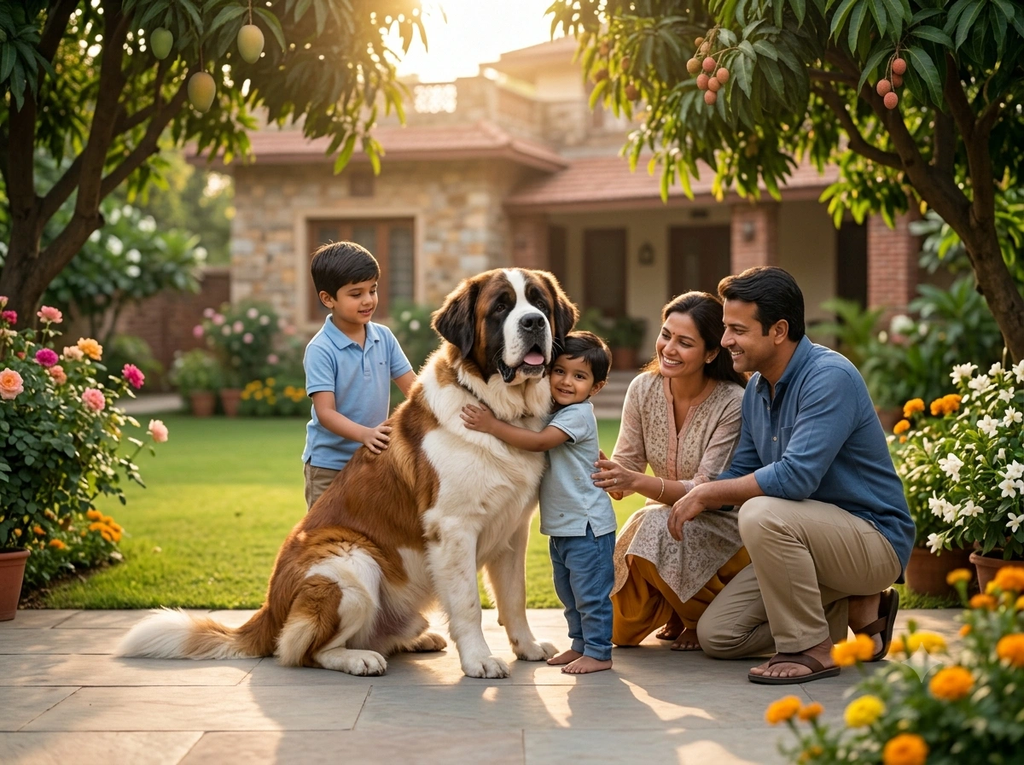
The Saint Bernard dog is an excellent choice for families who have enough space for a giant breed and are ready to provide regular care and attention.
The Saint Bernard breed is a great choice for:
- Families with children
- Homes with enough space
- Owners looking for a calm companion
- People who enjoy daily walks
- Families ready for large-dog grooming and care needs
Although the dog St Bernard enjoys spending time outdoors, it is not a highly active breed. It prefers moderate exercise followed by plenty of time relaxing with its family. Because of its thick coat, it also feels much more comfortable in cool weather than in hot climates.
Exercise Needs of a Saint Bernard Dog
The Saint Bernard dog is a giant breed, but it is not highly energetic. It enjoys daily activity but does not require long runs or intense exercise. Too much physical activity, especially while young, can place extra stress on developing joints and bones.

Adult Saint Bernards usually do well with 45 to 60 minutes of exercise each day. This can include two relaxed walks along with a little playtime. Puppies should have shorter exercise sessions because their bodies are still growing.
Some great activities for the Saint Bernard breed include:
- Daily relaxed walks
- Gentle fetch games
- Nature walks in cool weather
- Social play with other dogs
- Basic obedience training
The Great Bernard dog enjoys outdoor time but prefers cooler parts of the day. Avoid exercising in hot weather and always provide shade and fresh water after walks.
Grooming and Daily Care
The Saint Bernard dog has a thick double coat that protects it from cold weather. Both the short-haired and long-haired varieties shed throughout the year, with heavier shedding during seasonal coat changes.
Regular brushing helps remove loose hair, keeps the coat healthy, and reduces tangles.
A Saint Bernard short hair should be brushed two to three times each week. Long-haired dogs may need brushing three to four times a week, especially around the neck, legs, chest, and tail where the coat is longer.
Bathing every six to eight weeks is usually enough unless your dog becomes very dirty. Always use a gentle dog shampoo and dry the coat properly after bathing.
Along with coat care, remember to:
- Trim the nails every few weeks.
- Clean the ears regularly.
- Brush the teeth several times a week.
- Wipe around the mouth to remove drool.
- Check the paws after outdoor walks.

Keeping up with these simple grooming tasks helps your Saint Bernard breed stay clean, comfortable, and healthy.
Feeding and Nutrition
A balanced diet is one of the most important parts of caring for a dog St Bernard. Because this is a giant breed, it needs food that supports healthy growth, strong bones, and good joint development.
Choose good-quality food made for large breeds. Saint Bernard puppies should grow slowly to support healthy joints and avoid extra stress on their bodies.
Puppies usually need 3–4 small meals a day, while adult Saint Bernards do well with two meals. Keep fresh water available and avoid too many treats to prevent weight gain. Avoid heavy exercise around meal times.
Common Health Problems
Like many giant breeds, the Saint Bernard dog can face some health issues. Regular vet visits, good food, and a healthy weight can help keep them fit.
Some common health concerns include:
- Joint problems, including hip and elbow dysplasia.
- Bloat, a serious stomach condition that needs immediate veterinary care.
- Heart conditions that may require regular monitoring.
- Eye problems, especially eyelid disorders.
- Arthritis in older dogs.
- Heat stress due to their thick double coat.
With proper care, regular exercise, vaccinations, and routine health checks, most Saint Bernard dogs can enjoy a healthy and comfortable life.
Training a Saint Bernard
The Saint Bernard breed is intelligent, gentle, and eager to please. However, because these dogs become very large, training should begin as early as possible.
Use positive reinforcement with treats, praise, and patience. Harsh corrections are not necessary and may make the dog less confident.
Start with simple commands such as:
- Sit
- Stay
- Come
- Down
- Walk politely on a leash
Early socialisation is just as important as obedience training. Introduce your puppy to different people, places, sounds, and friendly animals while it is young. This helps the Great Bernard dog grow into a calm and well-behaved adult.
Saint Bernard Dog Adoption
If you are thinking about adding this gentle giant to your family, you can choose between buying from a trusted St Bernard breeder or considering Saint Bernard dog adoption.
When buying St Bernard puppies, always choose breeders who perform health testing, raise puppies in a clean environment, and prioritise temperament over appearance.
Adopting an older Saint Bernard dog from a rescue organisation is another wonderful option. Many adult dogs are already socialised and simply need a loving home.
Some people are also interested in designer crosses such as the Saint Bernard and Poodle, often called the Saint Berdoodle. These mixed dogs can inherit qualities from both parent breeds, but their size, coat, and temperament may vary from one puppy to another.
Final Thoughts
The Saint Bernard dog is a gentle and loyal giant breed. Its calm nature and loving personality make it a great family companion.
With proper nutrition, grooming, exercise, training, and regular vet care, the Saint Bernard breed can enjoy a happy and healthy life. From playful St Bernard puppies to adult dogs, the Great Bernard dog remains a gentle and loving family companion.