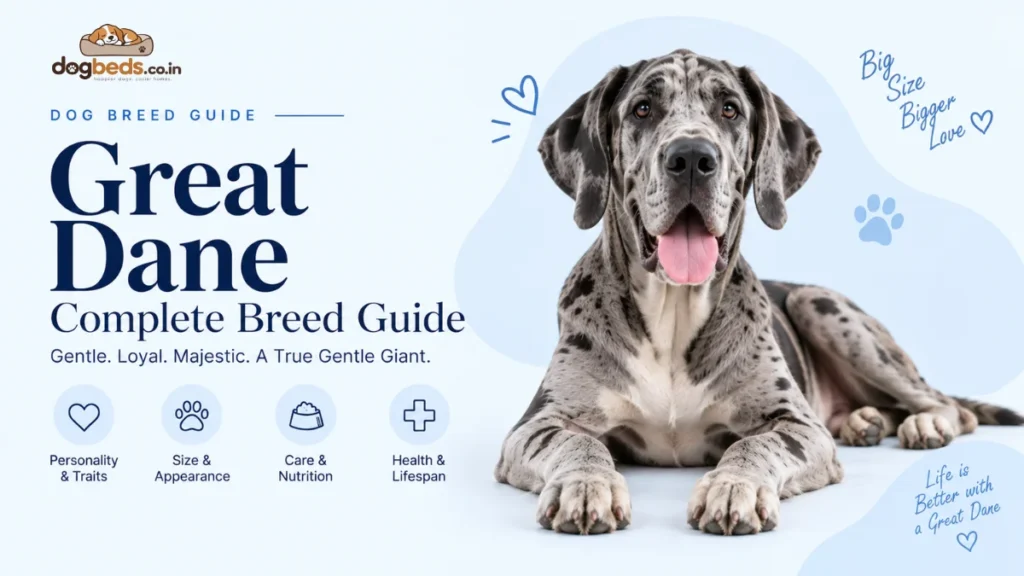
The Great Dane is one of the tallest and most loved dog breeds in the world. Although many people know it for its giant size, this gentle dog is calm, friendly, and deeply loyal to its family. The dane dog breed is often called the “Gentle Giant” because it combines a powerful body with a soft and loving nature.
The Great Dane dog breed was originally developed to hunt large wild animals, but today it is better known as a caring family companion. A well-trained giant dane dog enjoys spending time with people, gets along well with children, and usually lives peacefully with other pets when properly socialised.
If you are thinking about bringing home a Great Dane puppy or simply want reliable Great Dane information, this guide covers everything you need to know about the breed, including its history, size, personality, growth, colours, care, nutrition, training, and health.
Shop the collection

Great Dane Dog History
The Great Dane dog history goes back several hundred years to Germany. Even though the name suggests Denmark, the breed was actually developed in Germany by crossing powerful hunting dogs with mastiff-type breeds.
Over time, breeders focused on improving the dog’s temperament. Instead of being used mainly for hunting, the dane breed became a trusted family companion. Today, the dane breed dog is admired around the world for its calm behaviour, intelligence, and affectionate personality.
Many people also know the Great Dane as one of the great dane breeds that perfectly combines elegance with strength. While it still has an impressive appearance, modern Great Danes are loving pets that enjoy staying close to their families.
Great Dane Dog Size
One of the first things people notice about a Great Dane is its incredible height. It is recognised as one of the tallest dog breeds in the world, and many people even refer to it as the Great Dane largest dog in the world because of its towering appearance. While some giant breeds may weigh more, the Great Dane is famous for its exceptional height.
A fully grown male usually stands between 76 and 84 cm at the shoulder, while a female Great Dane is slightly shorter at 71 to 76 cm.
The weight of a Great Dane also reflects its giant build.
- Male Great Dane dog weight: around 70–90 kg
- Female Great Dane: around 55–70 kg
Because of their large frame, Great Danes continue growing for almost two years. During this time they need proper nutrition, controlled exercise, and regular veterinary care to support healthy bones and joints.
Many dog lovers also search for the tallest Great Dane, as several Great Danes have held world records for height.
Great Dane Growth Guide
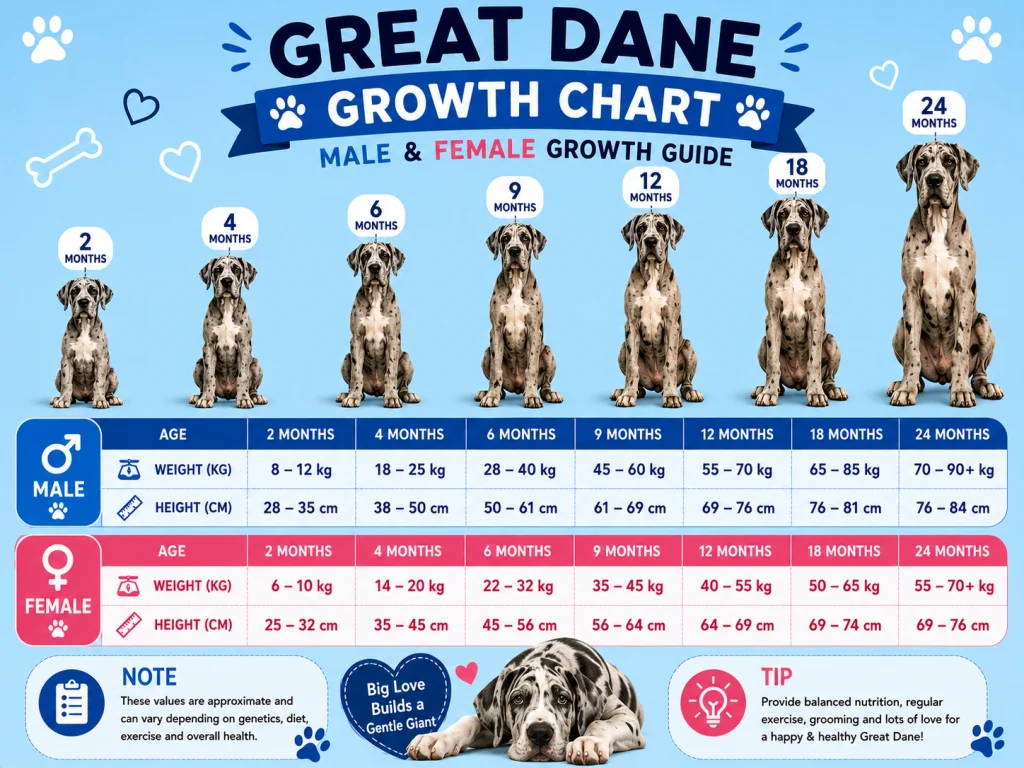
A Great Dane puppy grows very quickly during its first year. In just a few months, it changes from a small puppy into a large young dog. However, even after reaching its adult height, the body continues to develop, and most Great Danes do not fully mature until they are around 18 to 24 months of age.
Male Great Danes are usually bigger than females, but every puppy grows at its own speed.
Great Dane Coat Colours and Types
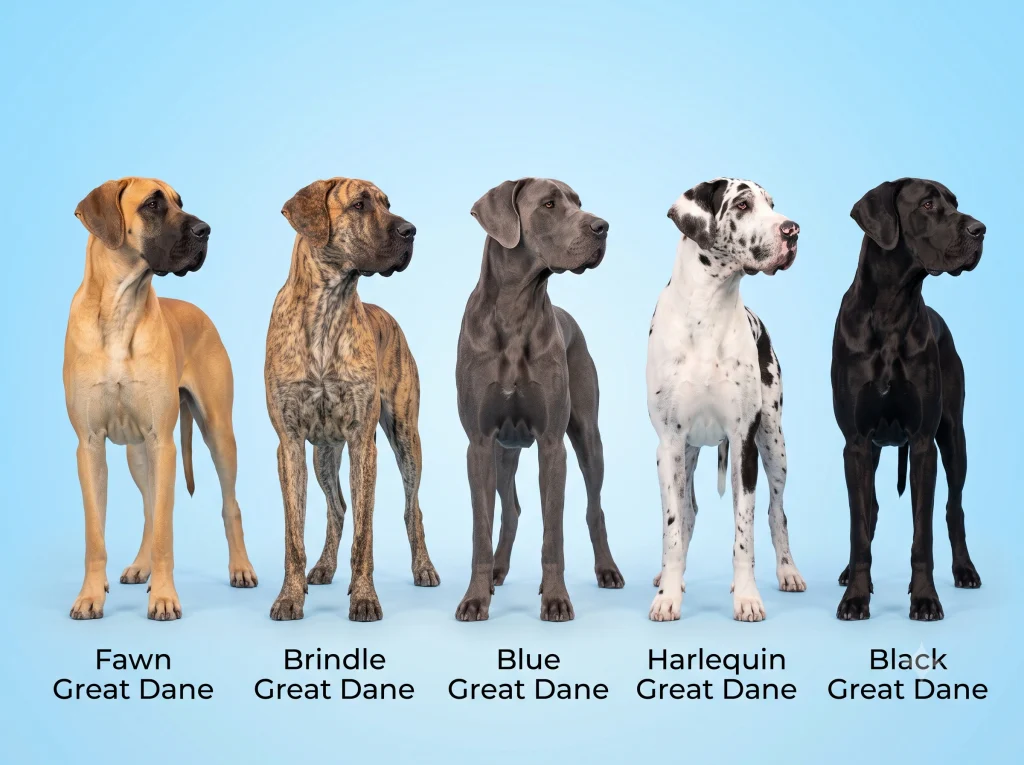
The Great Dane dog breed has a short and smooth coat. It comes in several beautiful colours, each giving the breed a unique look.
Fawn Great Dane
The Fawn Great Dane has a golden-yellow coat with a black mask around the face. This is one of the most popular and easily recognised colours.
Brindle Great Dane
A Brindle Great Dane has dark stripes over a golden or fawn base coat. Every brindle pattern is different, giving each dog a unique look.
Blue Great Dane
The Blue Great Dane has a solid steel-grey coat that gives the dog a graceful and elegant appearance.
Harlequin Great Dane
The black and white Great Dane is commonly known as the Harlequin Great Dane. It has a white coat with large black patches, making it one of the most striking colour patterns in the breed.
Black Great Dane
The Black Great Dane has a rich, glossy black coat from head to tail. This colour highlights the breed’s powerful body and elegant shape.
Regardless of coat colour, every Great Dane type has the same friendly nature and requires similar grooming and daily care.
Temperament of a Great Dane
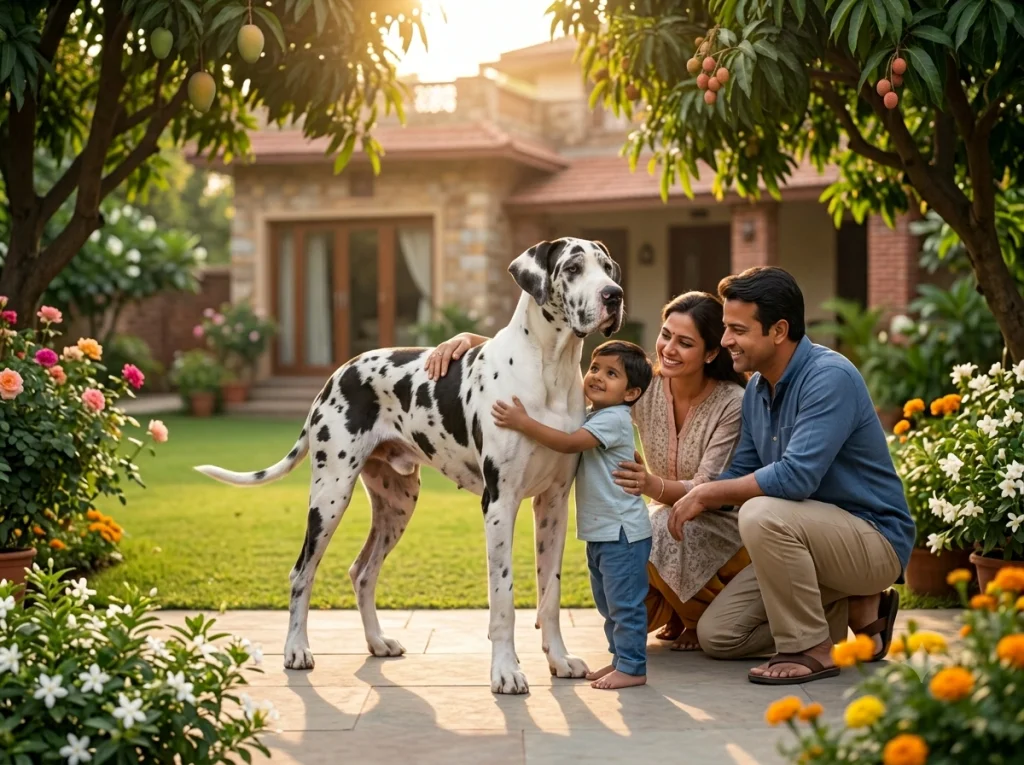
The temperament of a Great Dane is one of the biggest reasons people fall in love with this breed. Even though they are huge, Great Danes are gentle, patient, and affectionate.
They enjoy being around their family and often stay close to their owners throughout the day. Many owners describe them as oversized lap dogs because they love attention and physical affection.
The big dog Great Dane usually gets along well with children when raised with them.
American Great Dane vs European Great Dane
Many people compare the American Great Dane with the European Great Dane. Both belong to the same breed, but they have a few differences in appearance.
The American Great Dane has a lean body and long neck, while the European Great Dane has a heavier body, a wider chest, and thicker bones. Both are calm, friendly dogs that love being with their families.
Exercise Needs of a Great Dane
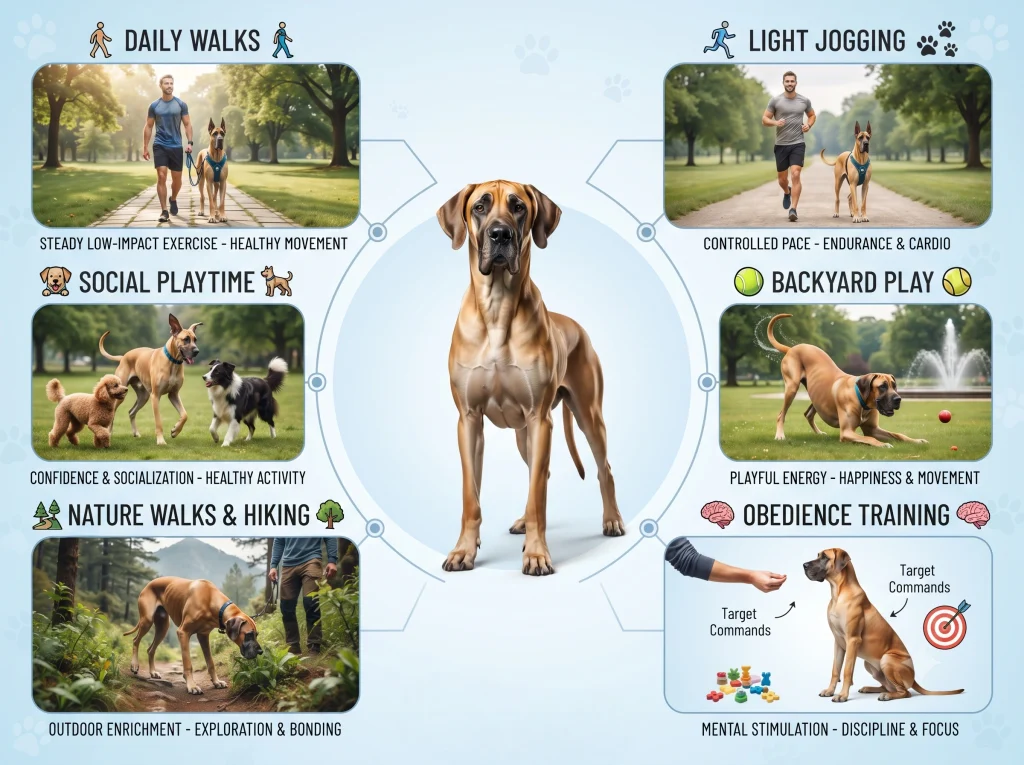
Although the giant dane dog is calm indoors, it needs regular exercise to stay healthy.
Adult Great Danes usually need 45 to 60 minutes of exercise each day.
Good activities for a Great Dane include:
- Daily walks
- Playtime
- Short hikes
- Training sessions
- Puzzle games
Because of their large size, avoid repeated jumping or running on hard surfaces while your Great Dane puppy is still growing.
A Healthy Diet for Your Great Dane
A healthy diet is important for every Great Dane. So always go for the best dog food for a Great Dane that is made for large or giant breeds and provides the nutrients needed for healthy growth.
A Great Dane puppy should eat food specially made for giant breed puppies. These diets support slow and steady growth, which helps reduce stress on developing bones and joints.
Adult Great Danes need high-quality food that supports muscle health without causing unnecessary weight gain. Fresh drinking water should always be available.
To lower the risk of stomach problems such as bloat, it is better to feed two or three smaller meals each day instead of one large meal.
Grooming and Daily Care
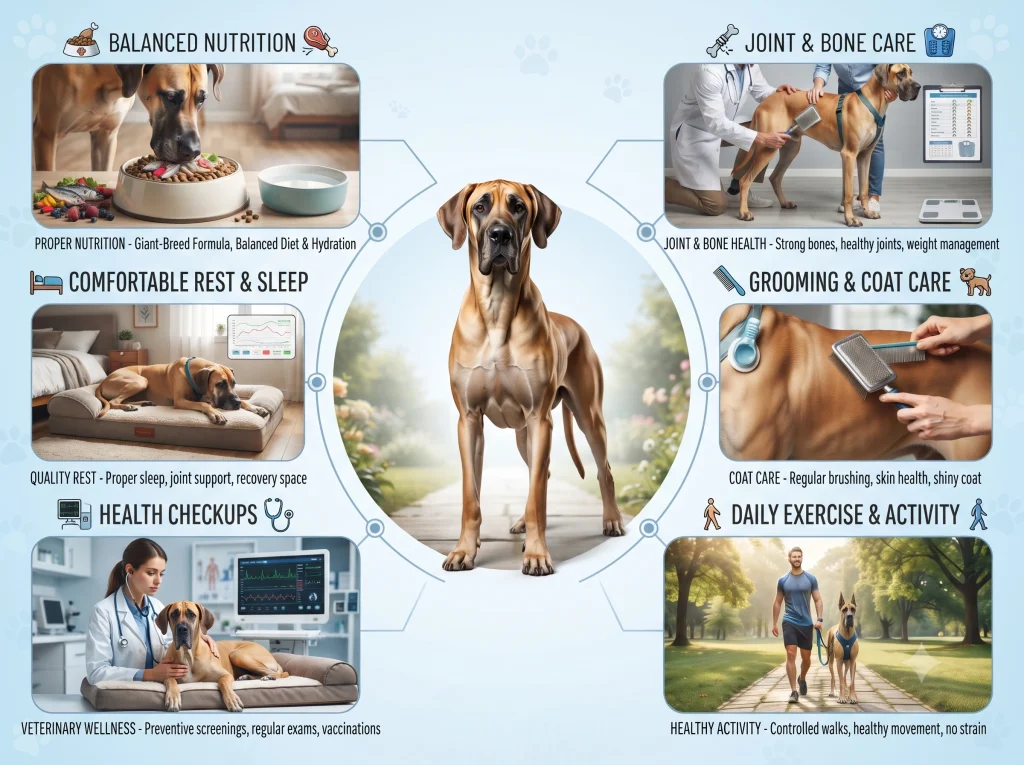
The Great Dane dog breed has a short coat that is easy to care for. Brush your Great Dane once or twice a week to keep the coat clean. Brush more often during shedding season.
Other care tips include:
- Trim the nails when they get long.
- Clean the ears regularly.
- Brush the teeth a few times a week.
- Give a bath when needed.
- Take your dog for regular vaccinations.
A big, soft bed gives your Great Dane a comfortable place to rest. Healthy food, daily exercise, and regular vet care help keep your dog healthy and active.
Great Dane Dog Training
The Great Dane is intelligent and usually enjoys learning new things. However, because of its size, early training is essential.
Great Dane dog training should begin as soon as your puppy comes home. Simple commands like sit, eat, stay and come should be given.
Reward good behaviour with praise, treats, and positive encouragement. Harsh punishment can make dogs nervous and reduce their confidence.
Early socialisation is equally important. Help your puppy get used to new people, places, and sounds. Short 10–15 minute training sessions work best.
Great Dane Puppy Training
Great Dane puppy training should focus on building good habits from the beginning.
Teach your puppy:
- House training and toilet routines
- Walking without pulling on the leash
- Basic obedience commands
- Gentle behaviour around children
- Proper greetings without jumping
- Confidence around new environments
Because a full-grown Great Dane is extremely powerful, teaching good manners while the dog is still small makes everyday life much easier.
Consistency, patience, and daily practice are the keys to success.
Common Health Problems
Like many giant breeds, the Great Dane can be prone to certain health conditions.
Some common concerns include:
- Hip dysplasia
- Elbow dysplasia
- Gastric dilatation-volvulus (bloat)
- Dilated cardiomyopathy (heart disease)
- Arthritis
- Wobbler syndrome
- Hypothyroidism
Healthy food, regular exercise, routine vet visits, and a healthy weight can help keep your Great Dane healthy and reduce the risk of many health problems.
Great Dane Mixed Breeds
Great Dane mixed breeds are created by crossing a Great Dane with another dog breed like:
- Labradane (Labrador Retriever × Great Dane)
- Great Danebull (American Pit Bull Terrier × Great Dane)
- Great Shepherd (German Shepherd × Great Dane)
- Boxane (Boxer × Great Dane)
- Saint Dane (Saint Bernard × Great Dane)
Each mix has different looks and personality, depending on the qualities instead of both parents’ breed.
Each mix can have different looks and personality traits, depending on the qualities inherited from both parent breeds.
Is a Great Dane the Right Dog for You?
The Great Dane is an excellent choice for families who have enough space and time for a giant companion. This breed is affectionate, patient, and enjoys being included in everyday family life.
Before bringing home a dane dog puppy, make sure you have enough space, time, and budget to care for a giant breed. With the right care and love, big danes grow into loyal and gentle family dogs.
Final Thoughts
The Great Dane is known for its giant size, gentle nature, and loyal personality. Its rich Great Dane dog history, friendly behaviour, and impressive Great Dane dog size make it a favourite among dog lovers.
An American Great Dane, a black and white Great Dane, or a playful Great Dane puppy can all become wonderful companions with good food ,regular vet checkups, regular exercise adn training.